
why indian ocean is so important to india?
By Abhishek rai / March 13, 2026


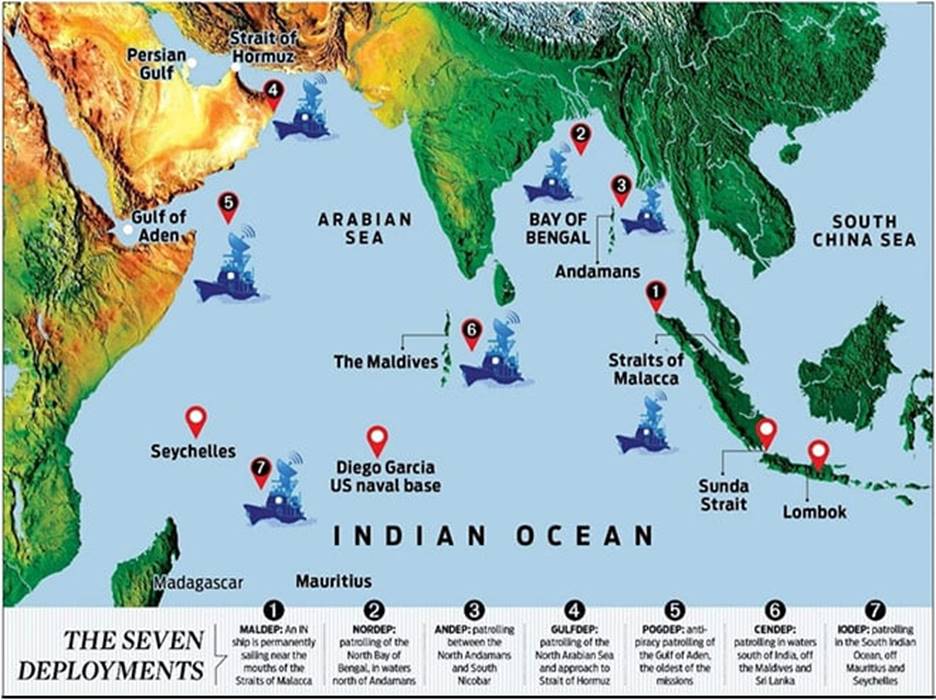
Table of Contents
- Introduction
- 1. The Indian Ocean Is India’s Trade Lifeline
- 2. It Protects India’s Energy Security
- 3. The Indian Ocean Is Vital for National Security
- 4. India’s Strategic Position Gives It an Advantage
- 5. The Indian Ocean Supports India’s Blue Economy
- 6. It Helps India Build Regional Power and Diplomacy
- 7. Rising Geopolitical Competition Makes It Even More Important
- Conclusion
Introduction
The Indian Ocean is not just a body of water for India—it is the country’s economic lifeline, security shield, and strategic gateway to the world. India is geographically located at the center of the Indian Ocean Region (IOR), giving it a unique and powerful maritime position. From trade and energy supplies to naval security and regional diplomacy, the Indian Ocean plays a crucial role in shaping India’s future.
In today’s world, where global trade, energy routes, and geopolitical competition are becoming more intense, the Indian Ocean has become even more important for India. With rising tensions in West Asia and disruptions near key sea lanes like the Strait of Hormuz, India’s dependence on safe ocean routes is more visible than ever.
1. The Indian Ocean Is India’s Trade Lifeline
India’s economy depends heavily on sea routes. A very large share of India’s international trade moves through the Indian Ocean. According to recent policy analyses, over 95% of India’s trade by volume passes through these waters, making the ocean essential for imports and exports.
This includes:
- Export of textiles, medicines, machinery, and IT-related goods
- Import of raw materials, electronics, fertilizers, and industrial products
- Access to global markets in Asia, Africa, Europe, and the Middle East
If shipping routes in the Indian Ocean are disturbed, India’s economy can face delays, higher freight costs, and rising inflation.
2. It Protects India’s Energy Security
India imports most of its crude oil and a significant amount of gas from the Middle East. Much of this energy reaches India by sea through the Indian Ocean and major chokepoints like:
- Strait of Hormuz
- Bab-el-Mandeb
- Strait of Malacca
Several recent analyses note that around 90% of India’s energy trade depends on these maritime routes.
This is why any conflict in West Asia or any blockade in the Strait of Hormuz becomes a major concern for India. In fact, Reuters recently reported that turmoil in the Middle East has already disrupted shipments and raised risks for India’s trade and energy supply chain.
3. The Indian Ocean Is Vital for National Security
India has a coastline of over 11,000 km, and the Indian Ocean acts as the country’s first line of defense. It helps India:
- Monitor enemy naval movement
- Protect ports and coastal cities
- Prevent piracy, smuggling, and sea-based terrorism
- Safeguard shipping lanes and maritime assets
India has strengthened naval patrols and mission-based deployments across important choke points in the Indian Ocean. The Information Fusion Centre – Indian Ocean Region (IFC-IOR) also improves maritime awareness and regional coordination.
4. India’s Strategic Position Gives It an Advantage
India sits in a central location in the Indian Ocean, almost like a “natural aircraft carrier.” This gives India a strong strategic advantage over many countries.
The Andaman and Nicobar Islands are especially important because they are close to the Strait of Malacca, one of the busiest shipping routes in the world. This allows India to:
- Track maritime movement
- Increase naval surveillance
- Strengthen Indo-Pacific security
- Improve regional influence
This location makes India a key power in the Indian Ocean and the broader Indo-Pacific region.
5. The Indian Ocean Supports India’s Blue Economy
The ocean is not only about defense and trade—it also offers huge economic opportunities through the Blue Economy, which includes:
- Fisheries and seafood exports
- Offshore oil and gas exploration
- Port development
- Marine tourism
- Renewable ocean energy
- Deep-sea mining and marine biotechnology
Recent policy sources estimate that India’s blue economy contributes around 4% of GDP and is becoming increasingly important for future growth.
Projects like port modernization and coastal development are helping India turn the Indian Ocean into a long-term engine of prosperity.
6. It Helps India Build Regional Power and Diplomacy
The Indian Ocean connects India with many important countries such as:
- Sri Lanka
- Maldives
- Mauritius
- Seychelles
- Indonesia
- Oman
- Kenya
- South Africa
Through maritime cooperation, India can:
- Build stronger diplomatic ties
- Provide disaster relief and humanitarian support
- Conduct joint naval exercises
- Support smaller island nations
- Counter growing influence of rival powers in the region
India’s vision of SAGAR (Security and Growth for All in the Region) shows that the country wants to become a responsible and trusted maritime leader in the Indian Ocean.
7. Rising Geopolitical Competition Makes It Even More Important
Today, the Indian Ocean is becoming a major center of global power competition. Countries like China, the United States, and India are all increasing their presence in the region.
For India, this matters because:
- China’s port investments in nearby countries create strategic pressure
- Naval activity in the Indian Ocean is increasing
- Maritime chokepoints are becoming more sensitive
- Control over sea routes can influence regional balance of power
This is why India is investing more in its navy, island infrastructure, port partnerships, and maritime alliances.
Conclusion
The Indian Ocean is deeply connected to India’s economy, security, energy, diplomacy, and future growth. It is not just geographically close to India—it is central to India’s national interests.
In simple words:
- Without the Indian Ocean, India’s trade slows down
- Without secure sea routes, India’s energy supply is at risk
- Without maritime strength, India’s strategic influence weakens
That is why the Indian Ocean is not just important to India—it is indispensable.
As India grows into a stronger global power, its role in the Indian Ocean will become even more critical in the years ahead.
source;
Abhishek Rai